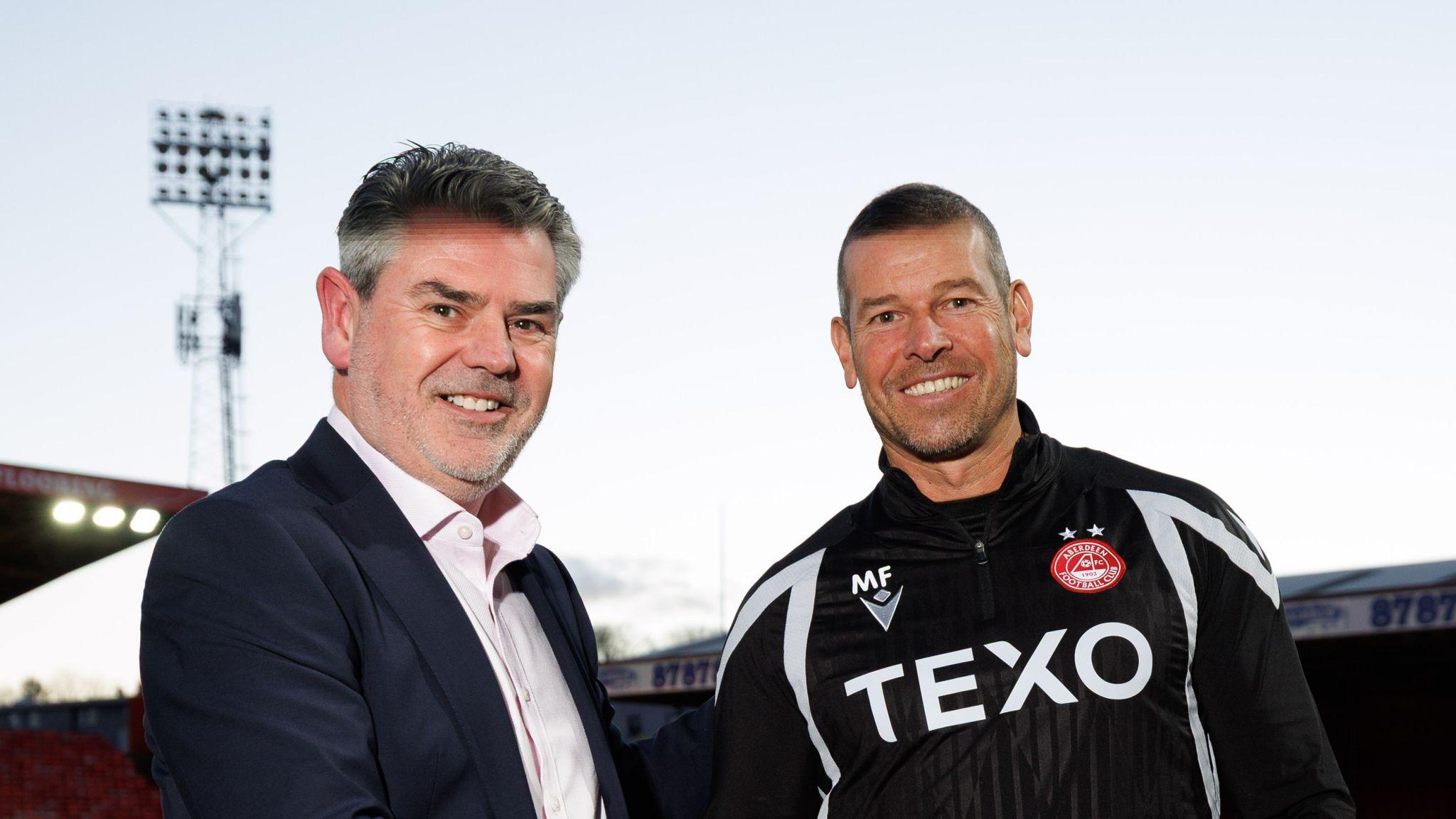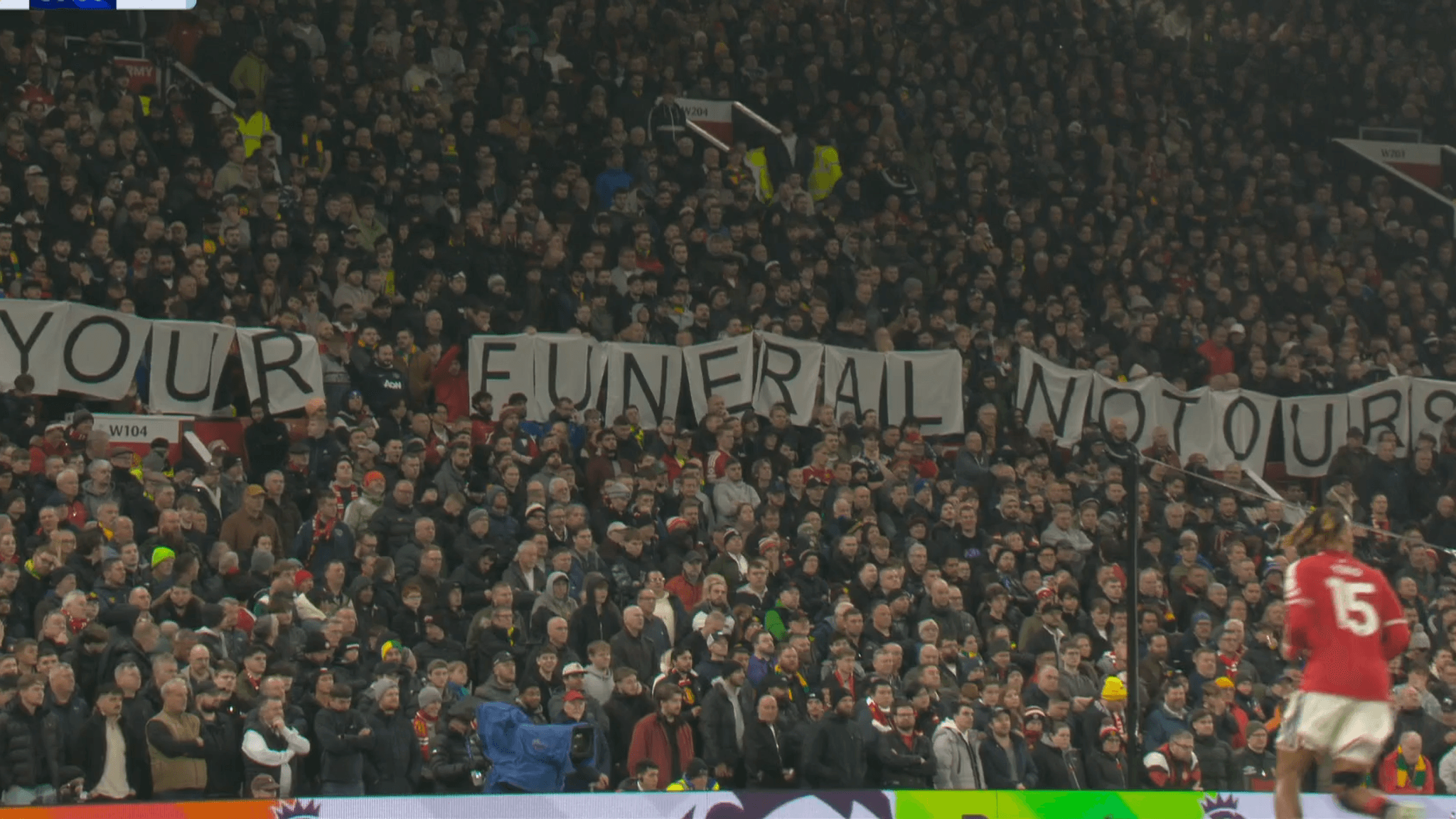
Manchester United's chief executive Omar Berrada has given an exclusive interview to Sky Sports addressing the club's turbulent start to the season, the decision to sack Michael Carrick and replace him with Mauricio Pochettino, and the mounting criticism directed at United's leadership structure.
With the club languishing in the Premier League relegation zone, United made the managerial change during the November international break. Pochettino will make his competitive debut in the dugout away at Liverpool this Sunday, live on Sky Sports, in one of football's fiercest rivalries.
Foundations laid despite current struggles
Despite United's precarious league position, Berrada remains convinced the club is moving in the right direction.
"One hundred per cent," he says. "I know it's difficult to say this when you're sitting 18th in the Premier League table. It's clear - it's not good enough, not acceptable, and that's why we've made the change that we've made, so that we can move forward. But we are laying the foundations for sustained growth to put us in a position where we can be competitive consistently. The foundations are there. I am convinced that we are heading in the right direction."
The club's defensive record has been particularly alarming. According to Idman.biz, United have conceded 19 goals in their first 10 league matches, their worst league start in 40 years.
Accepting criticism but drawing the line
This marks the third consecutive season in which United have changed their permanent manager mid-campaign. The pattern began when Erik ten Hag was replaced by Ruben Amorim partway through the 2024-25 season, and now Carrick has departed after just months in charge.
The repeated managerial upheaval has intensified scrutiny of the club's hierarchy, particularly after defender Lisandro Martinez publicly criticised technical director Jason Wilcox for insufficient preparation during the transfer window. Midfielder Bruno Fernandes also took aim at Carrick and his coaching staff's methods.
Berrada acknowledges the weight of fan frustration but draws a distinction between legitimate concern and unfair attacks.
"It is. I'm not going to lie. But let's be clear, we're not the protagonists. This is not about the individuals, this is about the club. This is about doing everything we can to make our fans happy, and that means improving the results on the pitch, and that means getting a team that is performing to its maximum potential, that the fans can feel proud of. Being in this position comes naturally with the criticism and the scrutiny that we're going to get. We accept it, some of it is fair, some of it does cross the line."
He points to the role of social media in amplifying negative narratives.
"I think we do live in this world of social media, where people like to generate negative stories about the club because it drives more engagement, and it drives more general noise and activity around the club. But we park that."
Reflecting on the instability, Berrada concedes there are lessons to absorb.
"If you think about the fact that we've had three permanent managers in less than three seasons, clearly we haven't achieved the stability that we want to - that's for sure. There are different circumstances as to why it didn't work out with Erik, Ruben and now Michael. And we're always learning. We're always trying to improve and understand what has failed."
However, he emphasises that responsibility extends beyond the boardroom.
"It is our responsibility to run the club. And, yes, coaches have a very important role to play. Players, of course, have to perform at the highest level consistently for any coach. They're part of a club that when you're wearing the shirt, you have an enormous amount of responsibility. And that responsibility means that you have to be giving your best every day in training, in the matches. And that's the same for executives. So I understand the frustration from the fans. It's absolutely normal. My commitment is that we're going to do everything we can to make sure that we put ourselves in a position where we're competing to win titles consistently."
The Glazer family's continued ownership alongside INEOS chief Sir Jim Ratcliffe has been a focal point of fan discontent. Berrada insists the dual-running structure is functioning effectively.
"It's working very well. I know there's a lot of noise and people look for narratives in the media and that's fine, that comes with being part of this club. But from my perspective what I see is a very dedicated and engaged ownership group - both ownership groups. There's constant dialogue, we speak sometimes on a daily basis. Between them there's a very good alignment. I think they have complementary skill sets, if you want to put it that way. All the decisions that have been taken, we've been all on the same page, we're all supporting each other, and the shared ambition is to do what's right for the club."
The Carrick departure and Pochettino's arrival
Carrick's removal came as a shock to many given his success last season, when he guided United to third place and Champions League qualification after taking over mid-campaign. However, the current season has unravelled dramatically, with the club's form deteriorating sharply.
Berrada explains the timing and reasoning behind the decision.
"It was a very difficult decision, to be honest, especially given all the affection everyone at the club has for Michael. When he took over the team last season, they did very well under him. They were playing some really good football, winning important matches. We qualified for the Champions League and finished third. We felt at the time he'd earned the right to continue leading the team. So when we started the season, it's clearly been a lot more difficult than we expected. The results haven't been good enough. I think we've dropped off in many areas. We wanted to give ourselves until the November international break to really take stock of what was happening with the team, what were the areas that needed to be improved. And in the end, we took the decision to make a change of coach. Unfortunately, sometimes when you're in the middle of the season, that's the one decision that you can make that can provoke a reaction, that can provoke a change in the dynamic. So that's why we had to take the decision."
Pochettino, who had just concluded his tenure as United States coach, arrives with considerable pedigree and experience at elite clubs. Berrada expresses optimism about the Argentine's appointment.
"He has a tremendous amount of passion and energy. We see it already in the two days he's been with us. There's a buzz about the place, and he's brought that with his staff. He has a very clear philosophy, identity of how he wants to see the team play. And I think he's coming just at the right time for him and us to be able to help the team and take us forward. He's equally as ambitious as we are, which is: we want to win titles. You have to think that when you're playing for Manchester United, when the results aren't going well, the pressure and the scrutiny is enormous. And all that noise around the club and around the players can be difficult to manage. So I think in Mauricio we bring somebody that has just the right amount of maturity and experience at the big clubs to be able to put his arms around the players and to let them perform at their highest potential."
According to AFP, Pochettino has vowed to ease pressure on United's players and "start from zero" as he begins his tenure. The same source reports that Berrada said the club would back Pochettino, describing support for the new manager and staff as a priority.
Transfer strategy and summer spending
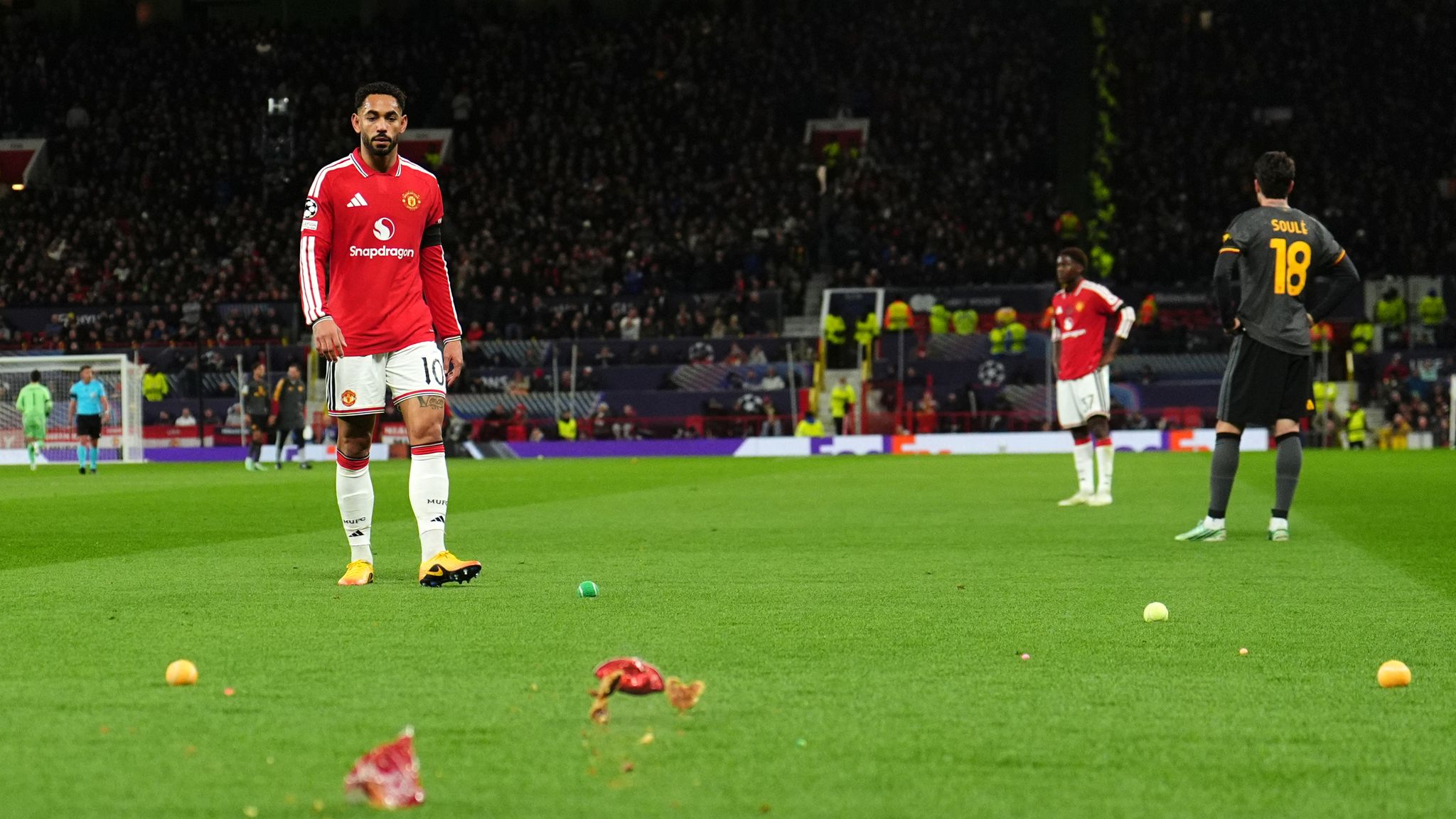
United invested £163 million on new players during the summer transfer window, with the bulk directed towards midfield reinforcements. The club signed Carlos Baleba, Youri Tielemans, and Andrey Santos, along with goalkeeper Karl Darlow and the return of Marcus Rashford from his loan spell at Barcelona.
Berrada defends the recruitment strategy, pointing to context from previous windows.
"You have to take it in the context of the last few years. The summer of 2025, I think the recruitment team was widely praised with the four players that were signed. And they did very well. They helped the team achieve Champions League qualification. When we look at this summer, we went in knowing what we needed to do. Of course, there have been different dynamics at play. It's probably been the summer or the transfer window where there's been the highest inflation in transfer fees. And we've said publicly and we've said consistently in the last few years that we need to stay disciplined. We need to take the right decisions. We need to buy the right players for the right value at the right time in terms of what the squad needs. And when we look at the summer transfer window of 2026, I know we're receiving a lot of criticism for it, but we're actually happy with the players that we bought. We think that Carlos Baleba, Youri Tielemans, Andrey Santos, and Karl Darlow - and let's not forget that we've also welcomed back Marcus Rashford, who had a very good season on loan at Barcelona - these are five additions that we think have made the squad fundamentally better."
The midfield focus was deliberate.
"It's true that we lost Casemiro, who is a top player and gave a lot to the club. We also lost Manuel Ugarte to, unfortunately, an ACL injury. So our focus was very much about straightening the midfield. When we started the transfer window, we really only had Kobbie Mainoo as our midfielder. So we wanted to reinforce that, and we did it."
Defence and recruitment discipline
The glaring omission from United's summer business was defensive reinforcement. The club's backline remains largely unchanged from five years ago, with only academy prospect Ayden Heaven introduced. United were linked with Newcastle's Lewis Hall but ultimately did not pursue a deal.
Berrada insists the club explored options but refused to overpay in an inflated market.
"When you look at the other areas of the pitch, and there's a lot of discussion about the back line, but we did come into it thinking: we have depth. We have nine players that can play in the back line, in the back four positions. So that's why we looked primarily at investing in the midfield. But we were always looking for opportunities. I think it's been widely reported that we were looking at potentially the left-back position as a reinforcement. I think what we've seen in the back line is we've had injuries, it's taken Matthijs de Ligt longer than we would want it to get back. Unfortunately, Luke Shaw suffered a muscle injury that meant he was out for five or six weeks. So could we have signed an additional defender to straighten the depth and the quality? Yes, but we have to find the right players and you have to find the right players at the right value. There's no point in us spending £40m, £50m for players that we're not convinced are going to add value to the team. So it's always about being disciplined and finding the right opportunities and getting the right players that are going to take us forward."
Berrada was pressed on the club's discipline after missing out on players such as Elliot Anderson, who joined Manchester City rivals for £116 million.
"When I talk about being disciplined, I talk about not overspending on players that don't necessarily add quality to the team. Because when you sign a player that doesn't work out for Man Utd, it becomes very difficult to move that player on or to get the sale we want. And that can set us back. So when I talk about being disciplined, I'm not talking about necessarily not spending to get the top players. We have the ambition to win, to win the Premier League, to win the Champions League, to win the domestic cups. And for that, we need top talent. So when we find the right opportunities, we will spend. But what we don't want to be doing is spending just for the sake of it."
Bruno Fernandes contract situation
One of the defining narratives of Pochettino's tenure could centre on the future of club captain Bruno Fernandes. The Portuguese midfielder has rejected two new contract offers from United, with his existing deal expiring at the end of the season, raising the prospect of his departure.
Berrada expresses deep respect for Fernandes but remains guarded on negotiations.
"Listen, I've said before, we have a tremendous amount of respect for Bruno. We're very fortunate to have him as a captain. What he's done for this team over the last six, seven years is absolutely incredible. Last year he won, I think, all the individual awards you can win. And we're very proud to have him as captain. It's true that we're having conversations about his new contract, but I prefer to keep that private. I think it's something that needs to be discussed behind the scenes between him and the club."
JJ Gabriel's departure
Sixteen-year-old academy talent JJ Gabriel announced his exit from United this week following an approach from Real Madrid. The manner of his departure—announced publicly without informing the club first—has frustrated the hierarchy, particularly given United's proud history of developing young talent.